by Ramon De La Puerta (Z-Lounge Regenerative Medicine and Stem Cell Therapy Centers)

Facing chronic joint pain or stiffness can be discouraging, especially if you’re told that pain meds or eventual surgery are your only options. Umbilical cord MSC therapy offers a non-surgical alternative that tackles joint problems completely differently — by regenerating and healing tissues rather than cutting them out. This article will explain how Stem Cells can improve joint pain, enhance mobility, and reduce inflammation without invasive procedures. We’ll focus on knees as a prime example (since knee osteoarthritis is so common), but the principles apply to hips, shoulders, and other joints too.

The Problem: Why Joints Hurt and Degenerate

In conditions like osteoarthritis (OA), years of wear-and-tear break down the cartilage that cushions your joints. With cartilage worn thin, bones rub and cause pain. Inflammation sets in, causing swelling and further pain, and the joint can become stiff. Traditional treatments are aimed at symptom relief:

These can help symptoms but don’t actually repair the cartilage or halt the underlying arthritis significantly. Surgery replaces the joint but is a big ordeal with months of rehab and potential complications.

Enter Stem Cell therapy: Instead of masking pain, mesenchymal stem cells aim to fix the joint from within, addressing the root causes of cartilage loss and inflammation.

How Stem Cells Fight Inflammation in Joints

Joint inflammation in arthritis is driven by molecules like IL-1, TNF-α, and others released in the joint that damage cartilage and cause pain. UC-MSCs are excellent inflammation fighters:

The effect for you: less swelling, less pain. Patients often report that their joint feels less “hot” or swollen within weeks, and the pain reduces significantly. For example, one trial noted that patients had pain reduction and improved daily activities by 3 months with no recurrence of the intense pain during the follow-up. That “no recurrence” part is key — unlike a steroid shot that might wear off, the anti-inflammatory effect of MSCs tends to be longer lasting because it addresses the inflammatory process more fundamentally.

How Stem Cells Promote Cartilage and Tissue Repair

Stopping inflammation is half the battle. The other half is rebuilding the cartilage or at least preventing further loss. UC-MSCs help here too:

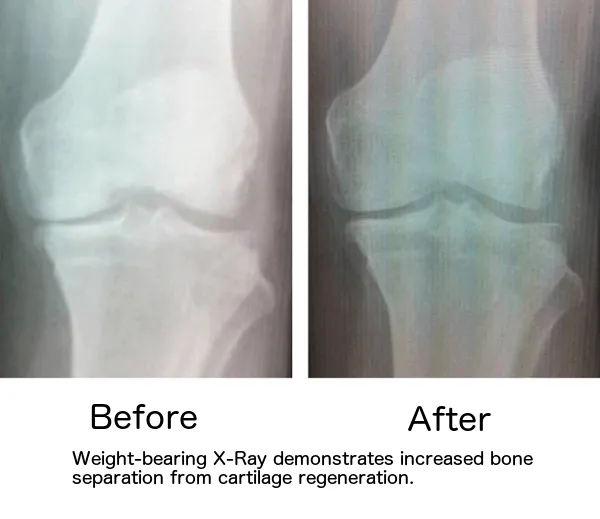
Clinical evidence of repair: It’s challenging to “see” new cartilage without doing an arthroscopy or MRI, but some clues from studies:

One patient story: A 60-year-old woman with knee OA treated with UC-MSCs reported that 6 months post-treatment, her knee felt “strong and stable” enough to return to skiing, something she thought she’d never do again. Imaging showed her joint space was slightly wider (a sign of more cartilage) and her orthopedic doctor was pleasantly surprised at how “quiet” (non-inflamed) the knee looked. This kind of outcome showcases the twin effect — reduce inflammation + rebuild tissue = improved joint function.

Improved Mobility and Function — How It Feels to the Patient

Biology aside, what does this mean for someone with joint pain?

No Surgery: Why That’s a Huge Advantage

Surgery, like knee or hip replacement, can help severe cases, but there are inherent downsides:

A patient named Linda, 63, had arthritis in both her knee and shoulder. She dreaded the idea of two surgeries. She opted for Stem Cell therapy: doctors injected her knee and shoulder in the same appointment. Over the next four months, she experienced significant relief in both—she avoided a knee replacement and no longer needed regular steroid shots in her shoulder. She’s back to swimming (which uses knees and shoulders) with minimal discomfort. This simultaneous multi-joint improvement is a unique advantage of biologic therapy.

What are the Conditions that could benefit from Stem Cell Therapy?

While osteoarthritis is number one, UC-MSCs can also help:

The Evidence in Numbers

To give a quantitative sense:

Long-Term Outlook

MSC therapy could potentially modify the course of arthritis. While long-term data is still coming in, it’s plausible that if you treat a moderately arthritic joint with MSCs, you might get many years of good function, potentially delaying or negating the need for joint replacement. Some patients treated 5+ years ago are still doing well without further intervention, which is encouraging.

Additionally, if arthritis is caught early (like mild degenerative changes with pain), MSCs combined with lifestyle changes (exercise, weight management) could halt progression for a long time.

Repeatability: Stem Cell therapy can be repeated if needed. Some patients do one round and are good for several years; others might choose to do another injection a year or two later if they had some improvement but then plateaued. There’s no strict limit — since these are cells from donors, you don’t “run out” as you might worry with using your cells. Repeat injections are safe and sometimes even more effective (one trial found repeated doses were superior to a single dose in knee OA) .

Summary — A New Era of Joint Care

To summarize how Stem Cells improve joints without surgery:

For someone over 45 with aching knees or hips, it means you could get back to walking, exercising, and enjoying life with your joints intact. It sounds too good, but the research and growing clinical experience back it up.

Of course, outcomes can depend on how severe the joint damage is and individual factors. Extremely advanced bone-on-bone arthritis in an elderly patient might still require surgery if the joint is too far gone. Stem Cells aren’t magical—they can’t quickly regrow a destroyed joint (even in severe cases, some pain relief can occur). However, they are showing tremendous promise for mild to moderate arthritis, chronic injuries, or even to boost recovery after joint surgery.

If you’re considering this therapy, consult an orthopedic or sports medicine specialist familiar with regenerative medicine. Many such doctors now offer it or can direct you to a trial. Thanks to these powerful umbilical cord cells, the prospect of healing without surgery is becoming a reality.

Let’s Stay Connected!
If you found this article helpful and want to learn more about regenerative medicine, stem cell therapy, and biohacking for longevity, follow me across platforms:

Website: www.zlounge.com.mx
Instagram: 
https://tinyurl.com/Z-Lounge-IG
Facebook: 
https://tinyurl.com/Z-Lounge-FB
YouTube: 
https://tinyurl.com/Z-Lounge-YT
LinkedIn: 
https://tinyurl.com/Z-Lounge-Linkedin

Subscribe on Medium to get notified when I publish new content written to empower your health journey.

Bibliography: