by Ramon De La Puerta (Z-Lounge Regenerative Medicine and Stem Cell Therapy Centers)

Stem cells might sound like science fiction, but understanding them can be surprisingly straightforward. Umbilical cord stem cells (specifically UC-MSCs) act like the body’s own repairmen — they find areas of damage, send out “tools” to fix the problem, and even replace damaged parts. This article briefly breaks down the science behind UC-MSC therapy: what these cells are, how they work inside your body, and why they’re generating so much excitement for treating diseases.

Meet UC-MSCs: Young, Powerful Repair Cells

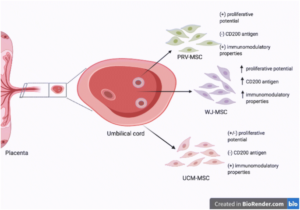
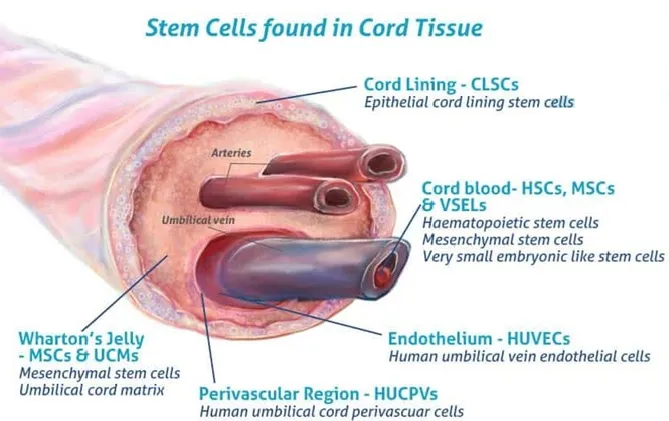
Umbilical cord mesenchymal stem cells (UC-MSCs) come from the Wharton’s jelly of the umbilical cord — a gelatinous substance in the cord that’s rich in these potent cells. Every baby’s umbilical cord, typically discarded after birth, is a treasure trove of regenerative cells. Here’s what makes UC-MSCs unique:

In everyday language: Imagine UC-MSCs as very adaptable young workers on standby. They’re not specialized yet, so they can be trained to do many jobs with the right signals — building new cartilage in a knee or calming down an overactive immune system.

Cross section of an umbilical cord, the Wharton’s jelly area is the “Source of UC-MSCs”.

How Do UC-MSCs Work? The Two Main Superpowers

UC-MSCs primarily help the body by regenerating tissue (by becoming new cells or encouraging repair) and regulating the immune/inflammatory response.

1. Regeneration and Differentiation — Rebuilding the Body

One of the most remarkable traits of UC-MSCs is their ability to turn into other cell types when needed, a process called differentiation. For example, if injected into a damaged knee, some UC-MSCs can receive local signals and become cartilage-producing cells (chondrocytes) to help repair worn cartilage. In a bone injury, they might become new bone cells (osteoblasts). They essentially fill the gaps where your body can’t do it alone.

However, direct differentiation is only part of the story. UC-MSCs also stimulate your body’s native cells to regenerate. They secrete a cocktail of growth factors and proteins — this is often called the paracrine effect (meaning they affect nearby cells by what they secrete). Key aspects of this regenerative secret sauce include:

Bottom line: UC-MSCs act as builders. They either become the bricks and mortar (new cells) or the foremen that direct repair by other cells. This is how they help regenerate cartilage in an arthritic knee, improve heart muscle after a heart attack, or even potentially create insulin-producing cells in a diabetic pancreas.

2. Immune Modulation — Calming the Storm

The second superpower of UC-MSCs is their ability to modulate the immune system. This is crucial because many diseases (like autoimmune disorders, allergies, and chronic inflammation) are caused or worsened by an imbalanced immune response. UC-MSCs are like the “peacemakers” of the immune system:

What’s truly fascinating is that MSCs act intelligently. They suppress the immune system when it’s overactive (like in autoimmunity) but do not completely shut it down. In fact, some studies in aging and frailty show that MSC therapy can restore a healthy balance to immunity rather than just immunosuppress it. Patients often report fewer flare-ups of autoimmune disease but still handle infections normally, suggesting a reset rather than total suppression.

Think of UC-MSCs as “immune whisperers.” They tell the immune system to chill out when it’s causing harm, but don’t dampen its ability to protect you from real threats. This selective modulation is a big reason why UC-MSC therapy is being explored for conditions like RA, MS, and even post-COVID lung inflammation.

Mesenchymal stem cells (MSCs) help regulate the immune system by interacting directly with immune cells or releasing substances (secretions) that affect immune activity. MSCs typically reduce inflammation and suppress excessive immune responses. At the same time, they encourage the production of beneficial immune cells, such as regulatory T-cells (Treg), Th2 cells, and M2 macrophages, which help control inflammation and repair tissue. MSCs achieve this by producing various substances like cytokines, chemokines, growth factors, and other signaling molecules. These substances maintain immune balance, preventing the immune system from becoming overactive or underactive.

Other Notable Tricks of UC-MSCs

Beyond the two roles mentioned above, UC-MSCs have some other interesting abilities:

The Paracrine Effect — Healing Without Replacing

Scientists often emphasize that 80% or more of MSCs’ therapeutic effects are paracrine — meaning via the substances they secrete, not becoming new cells. So even if UC-MSCs don’t directly turn into, say, brain cells, they can help the brain heal by reducing inflammation and releasing nerve growth factors. This understanding has led to research on using MSC-derived exosomes as a cell-free therapy. But that’s a topic for another day. The key takeaway is that UC-MSC therapy works even if the cells themselves don’t stick around long-term because they act as mediators to jump-start healing.

Why Umbilical Cord MSCs vs Other Stem Cells?

You might wonder, we have stem cells in our bone marrow and fat — why focus on umbilical cord cells? A few reasons:

That said, all MSCs share common traits. It’s not that one is magic and others are useless. Bone marrow and adipose MSCs are used in many clinical trials, too. UC-MSCs combine a substantial package of benefits that make them ideal for allogeneic (donor-to-patient) therapy.

Putting It All Together: A Symphony of Healing

To sum up the science: UC-MSCs function as orchestrators of repair. When introduced into the body, they survey the scene, secrete precisely the mix of signals needed to reduce harmful inflammation, and encourage rebuilding of tissues. They don’t work like a typical drug (which usually has one target); instead, they have a broad balancing effect — promoting regeneration where needed and dialing down destructive processes.

This multi-faceted approach is why a single cell type can seem to help diverse conditions — it’s not doing one specific thing for one disease, but restoring healthier function in whichever environment you put it. For example:

The beauty is that UC-MSCs act naturally and intelligently, adapting to the signals in the patient’s body. One review succinctly put it: “UC-MSCs accumulate in damaged or inflamed regions, promote tissue repair, and modulate immune response.” That single sentence captures why these cells are so promising.

Safety Corner: Understanding the Risks

No science discussion is complete without addressing safety. So far, UC-MSC therapy has shown a strong safety profile in clinical studies:

Researchers continue to monitor safety as trials expand. Each batch of clinical-grade UC-MSCs is tested to be free of bacteria, viruses, etc., and for potency. Like any therapy, using stem cells in unregulated settings could carry risks, so it’s critical to seek treatment through reputable sources.

Conclusion: A New Frontier in Medicine

Understanding how UC-MSCs work reveals why they’re being called “living drugs.” These cells don’t just target a symptom; they respond to the body’s needs in real-time, which is a fundamentally different approach than a pill or injection of a single chemical.

For someone over 45 reading this, you don’t need a PhD in biology to appreciate the concept: UC-MSCs help the body heal itself. They bring down harmful inflammation and promote the growth of healthy tissue. That’s it in a nutshell. Every complex mechanism described above serves that simple mission.

As research progresses, scientists learn how to harness these cells even better, such as pre-activating them, engineering them to deliver specific proteins, or using their exosomes. But even in their natural form, UC-MSCs are a potent therapeutic tool.

Let’s Stay Connected!
If you found this article helpful and want to learn more about regenerative medicine, stem cell therapy, and biohacking for longevity, follow me across platforms:

Website: www.zlounge.com.mx
Instagram: 
https://tinyurl.com/Z-Lounge-IG
Facebook: 
https://tinyurl.com/Z-Lounge-FB
YouTube: 
https://tinyurl.com/Z-Lounge-YT
LinkedIn: 
https://tinyurl.com/Z-Lounge-Linkedin

Subscribe on Medium to get notified when I publish new content written to empower your health journey.

Bibliography: